
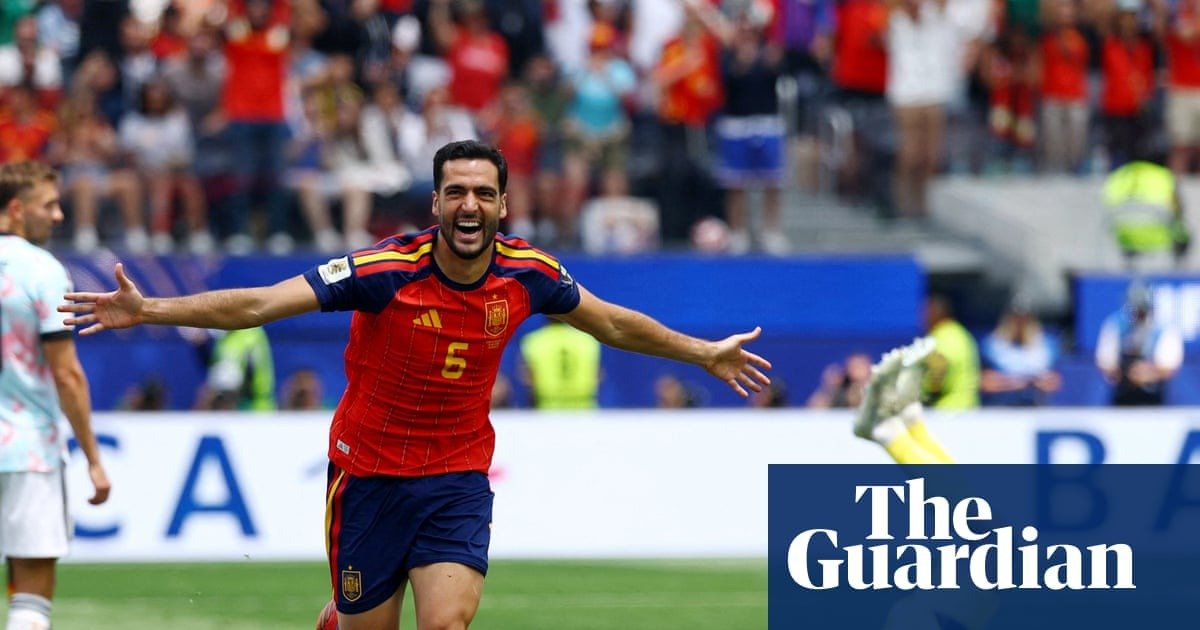
Mikel Merino Scores Late Winner as Spain Advances to Semi-Finals
The core tactical question in the World Cup 2026 quarter-final between Spain and Belgium was how each team would manage the transition phases and defensive solidity. Spain’s control phases, characterized by possession and repeated shots, forced Belgium into deeper defending and reliance on transition outlets, notably through Jérémy Doku and Kevin De Bruyne. The spatial parameters of the game were defined by Spain’s ability to progress the ball into the final third and create scoring opportunities, while Belgium focused on quick counter-attacks and set-piece threats.
Mikel Merino: Positional Profile and Spatial Role
Mikel Merino‘s introduction as a substitute in the 85th minute proved pivotal, as he scored the winning goal just two minutes later. Merino’s positional profile is that of a dynamic, box-to-box midfielder who excels at reading the game and making late runs into the penalty area. His spatial role in the team is to provide a link between the midfield and attack, using his intelligence and vision to create scoring opportunities. In this instance, Merino’s alertness and reaction to the spilled save by Senne Lammens allowed him to capitalize on the rebound and score the decisive goal.

Dani Olmo
playerThe system impact of Merino’s goal was significant, as it sealed Spain’s victory and progression to the semi-finals. The performance metrics that support this analysis include Spain’s dominance in possession (62% to 38%) and shots on goal (21 to 10). Additionally, Belgium’s injury woes, including the loss of Thibaut Courtois and Kevin De Bruyne, disrupted their defensive solidity and ability to relieve pressure. The table below highlights the key performance metrics from the match:
| Team | Possession | Shots on Goal | Pass Completion |
|---|---|---|---|
| Spain | 62% | 21 | 85% |
| Belgium | 38% | 10 | 78% |
The evidence from the match suggests that Spain’s control phases and progressive passes into the final third ultimately led to the winning goal. The combination of Merino’s positional profile, spatial role, and the team’s system dynamics created a scenario in which the substitute midfielder could capitalize on the rebound and score the decisive goal. As Spain advances to the semi-finals, their ability to manage the transition phases and defensive solidity will be crucial in determining their success in the tournament.
