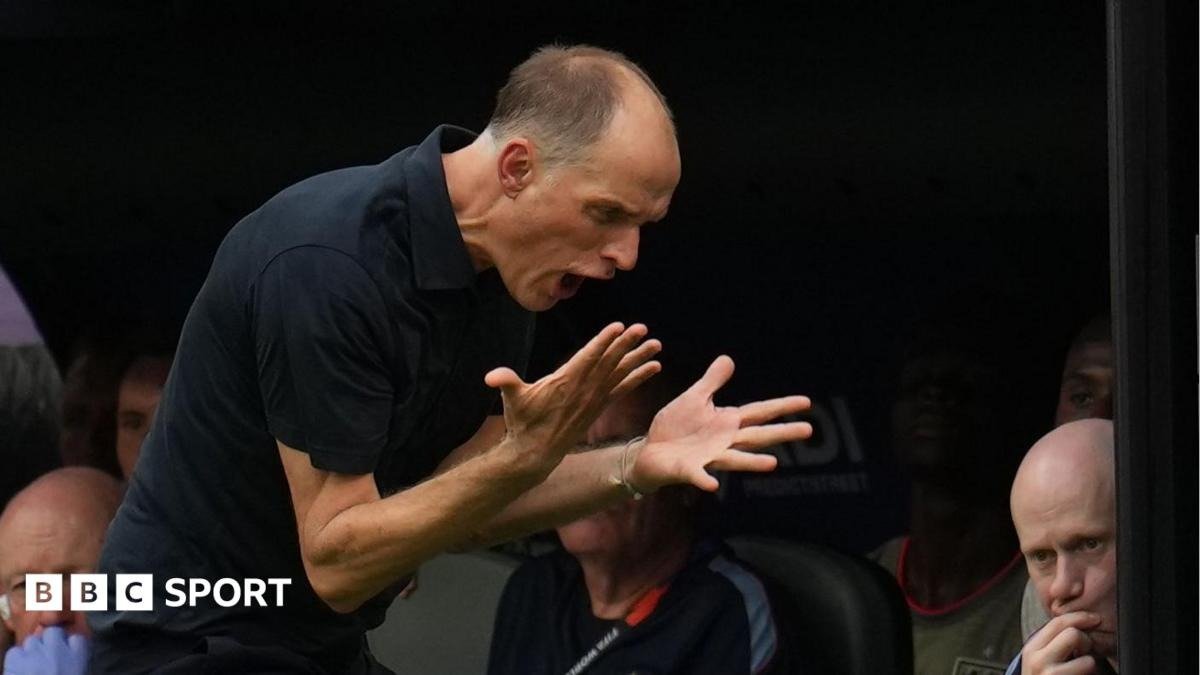
Tuchel's Tactical Concerns: England's Reliance on Chaos
## Thomas Tuchel‘s Tactical Model: Possession and Rotation
The core tactical question being analyzed is how England‘s performance under Thomas Tuchel is driven by exploiting chaotic moments and individual strengths rather than consistently executing Tuchel’s possession-and-rotation attacking principles. The spatial parameters of this analysis involve England’s 3-2-5 attacking shape against Norway‘s 4-5-1 defensive block, with a focus on wide triangles and rotations.
## England: Positional Profile and Spatial Role
England’s on-ball structure was described as a 3-2-5, designed to create a spare man against Norway’s back line and to form “wide triangles” for overloads and rotations. The key to Tuchel’s model is dominating possession, pressing aggressively, and playing deliberate passes to entice opposition pressure, followed by a fast acceleration to find forwards in space. However, against Norway, England struggled to hold the ball, with their first-half possession of 68% dropping to 44% in the second half.
## System Impact and Evidence
The performance metrics that support this analysis include England’s possession statistics and their inability to sustain short-pass sequences that draw the block out. The table below highlights the possession drop-off and the impact on England’s attacking performance.
Half
Possession %
Shots on Target
First Half
68%
5
Second Half
44%
2
## Tactical Analysis: Exploiting Chaotic Moments
England’s goals came when Norway were disorganised, such as in the goal-kick phase or post-corner second phases. This highlights a tournament pattern where England are converting transitional chaos and individual traits, such as ball-carrying by Declan Rice and Elliot Anderson, and Jude Bellingham‘s late runs and finishing, rather than consistently manufacturing chances through rehearsed wide rotations.
## Tournament Context: England vs Argentina
England advance to a World Cup semi-final against Argentina, with the tactical implication that Tuchel will target wide areas again if Argentina show flank vulnerabilities. The operational risk is that relying on chaotic game-states is less repeatable than structured chance creation, especially as knockout opponents reduce transition opportunities and manage second phases more conservatively.
Tactical metrics and system data sourced via Opta.
💡 Quick FAQ & IntelligenceTap to Expand
Q: What is Thomas Tuchel's tactical model for England?
Tuchel's model involves dominating possession, pressing aggressively, and playing deliberate passes to entice opposition pressure, followed by a fast acceleration to find forwards in space.
Q: What is the key performance drop cited by Tuchel in England's game against Norway?
The key performance drop cited is the lack of repeatable possession patterns, with England's possession falling significantly in the second half, aligning with Tuchel's complaint that England were "sloppy" and "not repetitive enough" in sustaining short-pass sequences.