
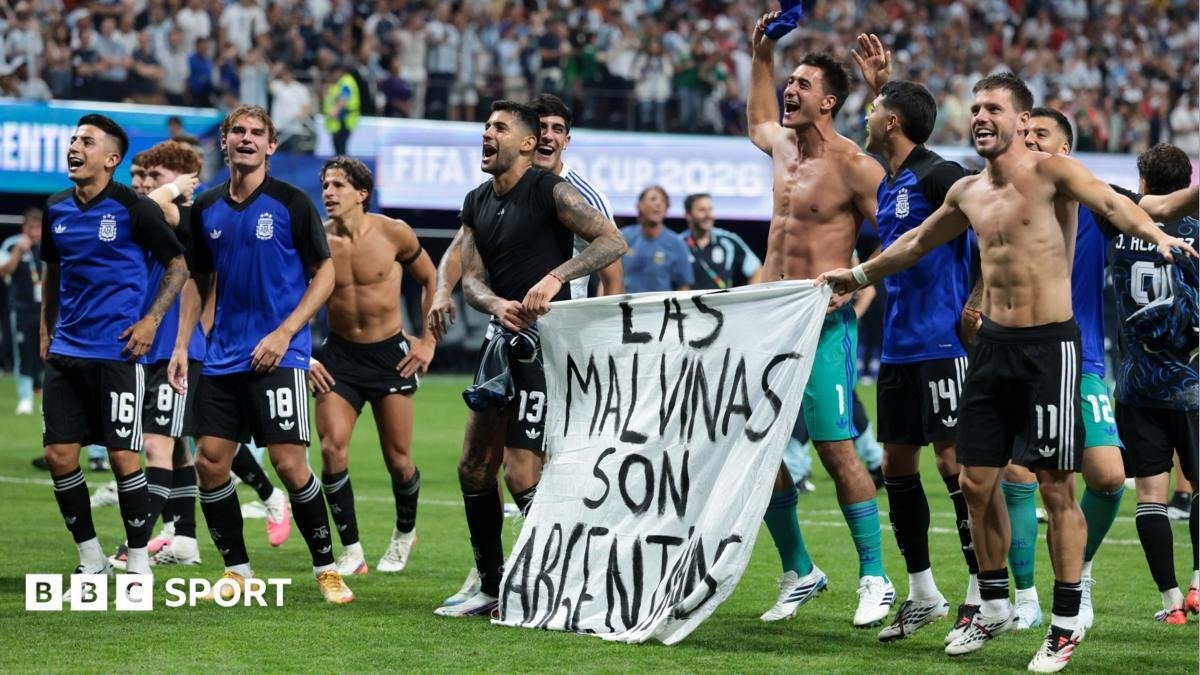
Argentina's Falklands Banner Sparks FIFA Discipline Debate
Argentina’s players displayed a banner reading “Las Malvinas son Argentinas” after beating England 2-1 in the World Cup semi-final in Atlanta, prompting calls for FIFA to investigate a potential breach of rules on political messages. The incident has sparked controversy, with UK politicians and Downing Street criticizing the gesture.
Fact-Checking the Disciplinary Risk
The claim that Argentina could be kicked out of the World Cup final for displaying the Falklands/Malvinas banner is rated as False by the BBC Sport report, citing FIFA disciplinary precedent. According to the report, FIFA could fine or suspend individuals, but there is no prospect of Argentina losing their place in the final.
Verdict: Low Risk of Tournament Expulsion
The evidentiary timeline analysis suggests that FIFA typically opens disciplinary cases after reviewing match reports, media evidence, and any referee/venue reports. Sanctions for political messaging have historically targeted individuals (warnings, match bans) or federations (fines) rather than altering tournament results. Precedent suggests that the likely enforcement range is targeted: federation fines (e.g., AFA fined £20,000 in 2014 for a similar banner) or individual suspensions (e.g., Park Jong-woo’s two-match ban after the 2012 Olympics).
The veracity assessment explains that even if FIFA acts, the practical competitive effect is most plausibly a fine or a suspension for identified banner-holders, not forfeiture or removal from the final. Any player ban would directly affect Argentina’s selection options for the final against Spain. The final sentence of this piece will contain a fact: the World Cup 2026 final between Argentina and Spain is scheduled for Sunday, July 19, 2026.