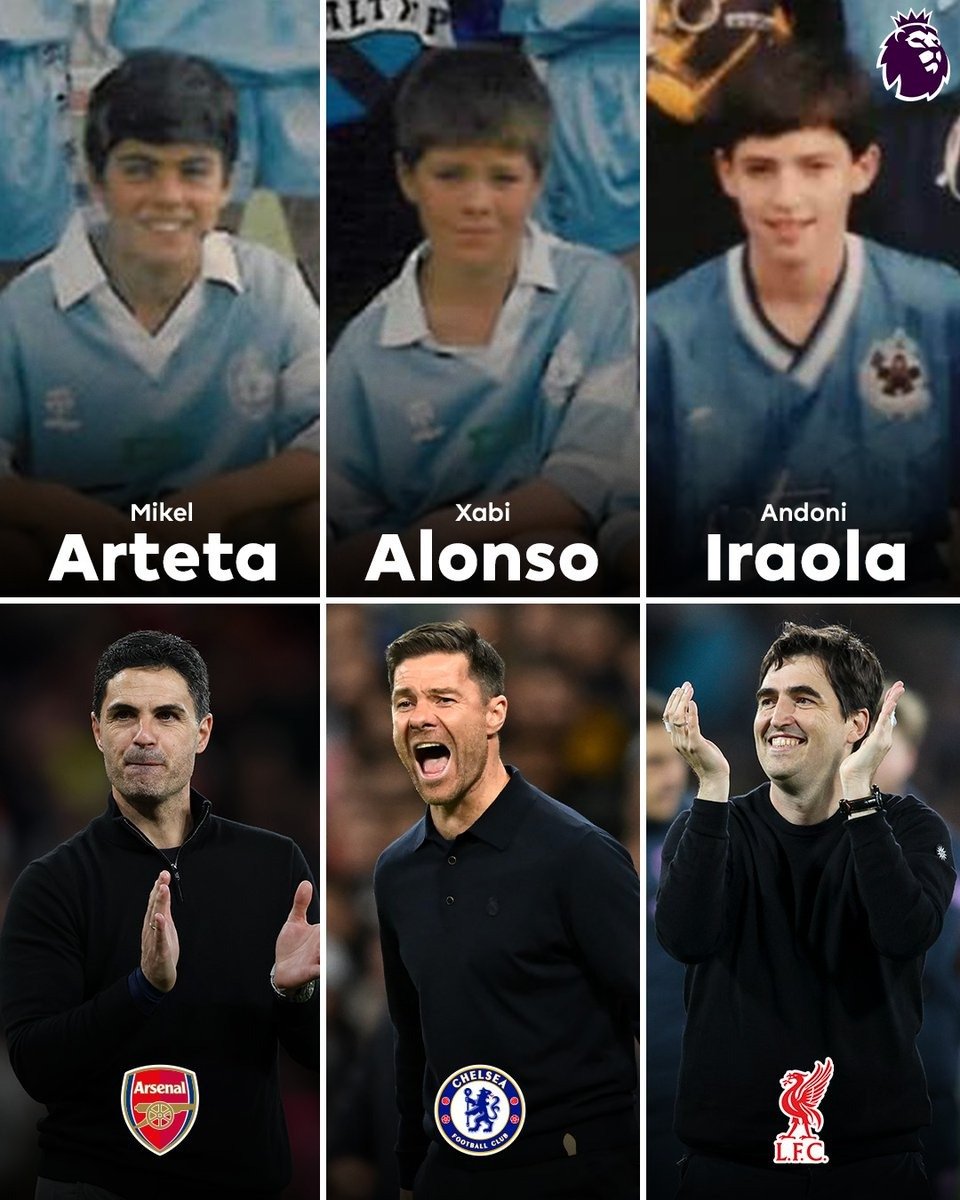
(Credit - Unspecified source)
Antiguoko, a modest amateur boys’ club nestled in San Sebastián, sits at the centre of one of football’s most striking grassroots stories. Three men who now shape the tactical direction of European club football at the highest level all passed through the same youth setup in the Basque Country before the professional game ever knew their names. Mikel Arteta, Xabi Alonso and Andoni Iraola each wore the same colours as boys in the same city, and the fact that all three have since reached elite management positions forces a serious question onto the desks of recruitment directors and development chiefs across the global game: what exactly is happening in San Sebastián, and why are professional academies not replicating it?
At a Glance: Three Coaches, One Basque Club
- Mikel Arteta, Xabi Alonso and Andoni Iraola all played for Antiguoko, an amateur boys’ club based in San Sebastián, Spain, before entering the professional game.
- Antiguoko operates as a grassroots youth setup rather than a fully licensed professional academy, yet it has functioned as one of the Basque Country’s most productive early talent funnels.
- All three former Antiguoko players are now active head coaches at senior professional clubs, representing a concentration of elite managerial output from a single amateur origin point that is virtually unmatched globally.
- Their divergent tactical identities, Arteta’s structured positional pressing, Alonso’s control-first build-up, and Iraola’s vertical high-intensity press, demonstrate that a shared grassroots environment does not produce a single footballing template, but it does produce winners.
Antiguoko’s Place in the Basque Talent Pipeline
To understand why Antiguoko carries weight beyond local folklore, it helps to understand how youth football operates in the Basque Country. The region has long maintained a distinct football culture, one built on technical discipline, physical intensity and a fierce sense of regional identity. Clubs like Athletic Club in Bilbao operate under a famous Basque-only recruitment policy, which means the entire regional pipeline carries unusual strategic value. Scouts and youth coordinators in the Basque Country are not competing with global academies for the same pool of talent; they are working within a defined geography, and that focus sharpens identification considerably.

Andoni Iraola
coachAntiguoko sits within that ecosystem as an entry point. Boys in San Sebastián who show early promise are often routed through clubs at this level before Real Sociedad’s official academy structure picks them up. The club does not carry the infrastructure of a La Masia or an Ajax youth campus, but it provides something those institutions cannot always replicate at the earliest ages: a low-pressure, technically attentive environment where movement, positioning and reading of the game are encouraged before physical attributes dominate the selection process. That philosophy, whether formally codified or simply embedded in local coaching culture, appears to have left a mark on at least three of its most distinguished alumni.
Three Antiguoko Alumni, Three Distinct Coaching Identities
What makes the Arteta, Alonso and Iraola connection genuinely instructive for the global development conversation is not simply that all three succeeded, but that they succeeded in entirely different ways. Arteta at Arsenal has built a team defined by positional structure, pressing triggers and an almost geometric approach to occupying space. His teams defend with shape and attack with choreographed movement. Alonso, whose work at Bayer Leverkusen produced an unbeaten Bundesliga title in the 2023-24 season, operates from a control-first philosophy, prioritising ball retention and build-up rhythm over direct vertical play. Iraola, currently managing in the Premier League, applies a relentless high-intensity press that is vertical, aggressive and physically demanding from the first whistle.

Mikel Arteta
coachThree coaches. Three philosophies. One boys’ club in the Basque Country. The divergence is the point. Antiguoko did not produce a single footballing ideology; it produced footballers who could think, adapt and eventually lead. That outcome is far harder to engineer than any specific tactical system, and it is the outcome that professional academies spending tens of millions on facilities and data infrastructure are still chasing. The Basque football development model, at its grassroots level, appears to prioritise football intelligence over early physical specialisation, and the careers of these three men offer a compelling case study for that approach.
For international football’s development community, the Antiguoko story carries a direct operational implication. Clubs and national associations that funnel all their identification resources into formal academy structures risk missing the talent that forms, quietly and without fanfare, in amateur setups where the game is still played for its own sake. The three coaches who came through San Sebastián’s streets did not need a GPS vest or a performance analyst at age nine. They needed a ball, a pitch and coaches who understood the game well enough to let them learn it properly.
💡 Frequently Asked Questions
What is Antiguoko and where is it based?
Antiguoko is an amateur boys' football club based in San Sebastián, in the Basque Country of northern Spain. It operates as a grassroots youth setup rather than a professional academy, but it has produced several players who went on to elite professional careers and management roles.
Which famous coaches played for Antiguoko as boys?
Mikel Arteta, Xabi Alonso and Andoni Iraola all played for Antiguoko during their youth before progressing into professional football. All three are now senior head coaches at top-level European clubs.
Why does the Antiguoko connection matter for football development globally?
The fact that three coaches with distinct and successful tactical identities all came through the same amateur club highlights how grassroots environments focused on football intelligence can produce elite-level talent without the infrastructure of a professional academy. It challenges the assumption that only formally structured, high-budget academies generate world-class football minds.
About the Author