Serie A Ballon d’Or Winners: All 18 Awards From 1961 to 2007
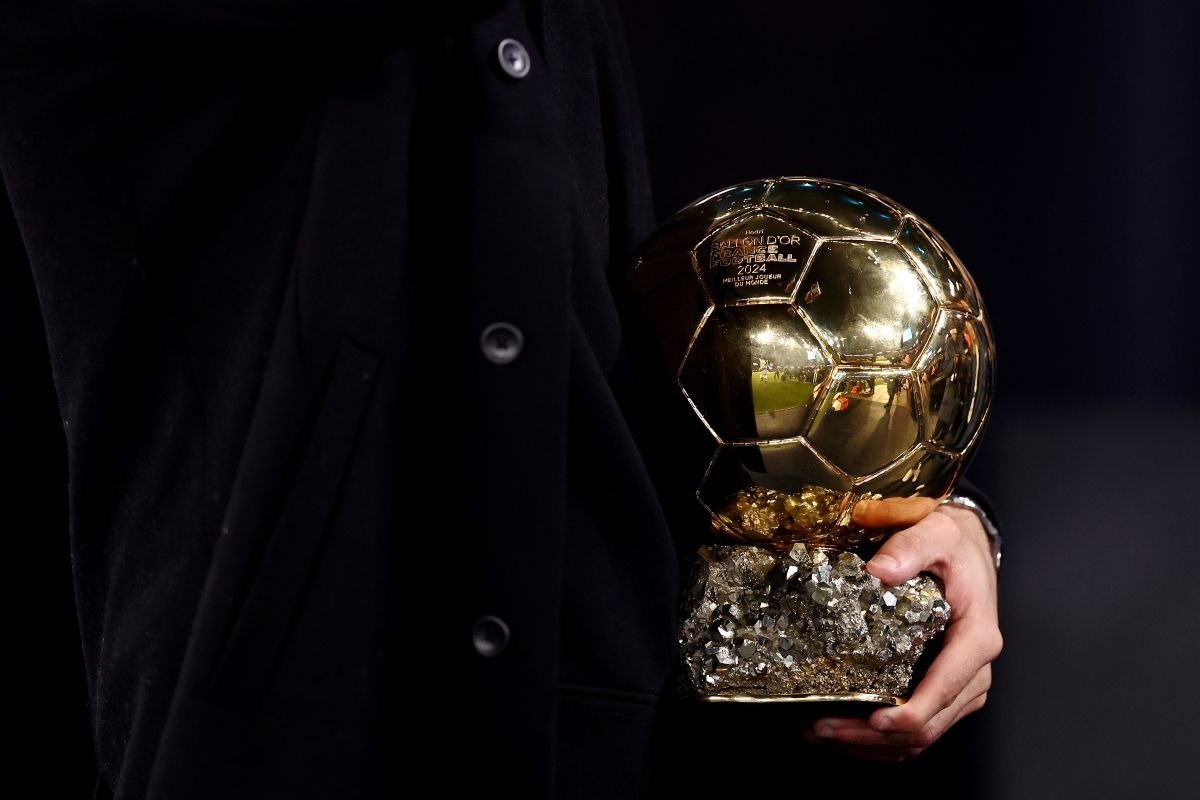
Players based at Italian clubs have won the Ballon d’Or 18 times, and the last of them was Kaká of AC Milan in 2007. Juventus and Milan each account for eight of those awards and Inter for two. No Serie A-based player has won it in any edition since 2007. This guide lists every winner, the club tally and the story behind each award. It looks at the league’s long record rather than any single ceremony, and the Serie A record sits alongside teams such as Juventus, Milan and Inter.
The history runs across three clubs, three football eras and a shifting balance of power. Tracing these awards shows tactical change, international tournament heroics and the financial shifts that moved the centre of gravity away from the Italian league.

AC Milan
clubSerie A Ballon d’Or winners at a glance
| Year | Winner | Club | Nationality |
|---|---|---|---|
| 1961 | Omar Sívori | Juventus | Argentine-born, Italy international |
| 1969 | Gianni Rivera | AC Milan | Italy |
| 1982 | Paolo Rossi | Juventus | Italy |
| 1983 | Michel Platini | Juventus | France |
| 1984 | Michel Platini | Juventus | France |
| 1985 | Michel Platini | Juventus | France |
| 1987 | Ruud Gullit | AC Milan | Netherlands |
| 1988 | Marco van Basten | AC Milan | Netherlands |
| 1989 | Marco van Basten | AC Milan | Netherlands |
| 1990 | Lothar Matthäus | Inter Milan | Germany |
| 1992 | Marco van Basten | AC Milan | Netherlands |
| 1993 | Roberto Baggio | Juventus | Italy |
| 1995 | George Weah | AC Milan | Liberia |
| 1997 | Ronaldo | Inter Milan | Brazil |
| 1998 | Zinédine Zidane | Juventus | France |
| 2003 | Pavel Nedvěd | Juventus | Czech Republic |
| 2004 | Andriy Shevchenko | AC Milan | Ukraine |
| 2007 | Kaká | AC Milan | Brazil |
Club tally: Juventus, Milan and Inter
| Club | Awards | Years |
|---|---|---|
| Juventus | 8 | 1961, 1982, 1983, 1984, 1985, 1993, 1998, 2003 |
| AC Milan | 8 | 1969, 1987, 1988, 1989, 1992, 1995, 2004, 2007 |
| Inter Milan | 2 | 1990, 1997 |
| Total | 18 |
Platini (1983 to 1985) and Van Basten (1988, 1989 and 1992) each won three times while playing in Italy, which makes them the most decorated Serie A players in the award’s history. Only three Italian players won it while at an Italian club: Rivera, Rossi and Baggio. Sívori, who was born in Argentina and later played for Italy, won the first one in 1961.
How the Serie A winners shaped each era
- 1961 to 1969: Sívori and Rivera, the first Juventus and Milan winners.
- 1982 to 1985: Rossi and then Platini’s three in a row make Juventus the focus of the award.
- 1987 to 1992: Milan’s Dutch pair, with Gullit and then Van Basten taking four awards between them, plus Matthäus for Inter in 1990.
- 1993 to 1998: Baggio, Weah, Ronaldo and Zidane show the league attracting the best attackers and playmakers in the world.
- 2003 to 2007: Nedvěd, Shevchenko and Kaká close the Italian run.
1. Omar Sívori Opens the Italian Account at Juventus in 1961
The Argentine-born forward established a precedent for the division by becoming the first Serie A-based player to claim France Football’s golden prize. Representing the Italian national team internationally while starring in Turin, Sívori blended technical flair with relentless attacking output to set a high benchmark for future recipients.

Juventus
club2. Gianni Rivera Secures Milan’s First Honor in 1969
Affectionately nicknamed the Golden Boy, the playmaker drove the Rossoneri to European Cup glory with immaculate vision and distribution. His metronomic control in midfield anchored Milan’s continental ambitions and brought the prestigious individual trophy to San Siro for the very first time.
3. Paolo Rossi Claims the 1982 Prize After World Cup Glory
Operating as the spearhead for both club and country, Rossi captured the accolade following a stellar tournament campaign in Spain where he finished as the Golden Boot winner. His predatory movement inside the penalty area translated directly into global recognition after steering Italy to international success.
4. Michel Platini Dominates Turin with Three Consecutive Wins from 1983 to 1985
The French maestro engineered an unprecedented era of individual supremacy by securing three consecutive awards while pulling the strings for Juventus. His staggering goalscoring record from midfield and immaculate spatial awareness extended the club’s golden run following Rossi’s triumph.
5. Ruud Gullit and Marco van Basten Drive Milan’s Dutch Revolution
Arrigo Sacchi’s tactical masterclass at Milan relied heavily on a formidable Dutch contingent, with Gullit claiming the trophy in 1987 before Van Basten rattled off three victories in 1988, 1989, and 1992. Van Basten’s combination of lethal finishing and exquisite aerial ability defined an era of absolute domestic and European superiority.
6. Lothar Matthäus Lifts the 1990 Trophy for Inter
The German powerhouse captained his national team to global tournament success in Italy before translating that authoritative form directly to San Siro. His box-to-box dynamism and tactical intelligence made him the undisputed heartbeat of an uncompromising Nerazzurri side.
7. Roberto Baggio Wins in 1993 Following UEFA Cup Success
Renowned for his sublime close control and dead-ball prowess, Baggio earned the accolade during a sensational individual campaign where Juventus conquered the UEFA Cup. The Divine Ponytail combined aesthetic brilliance with decisive contributions in high-stakes matches.
8. George Weah and Ronaldo Rewrite Modern Scoring Standards
Weah made history in 1995 by becoming the first African player to claim the award following a stellar transition to Milan, highlighted by remarkable solo runs from deep. Shortly after, Brazilian phenomenon Ronaldo arrived at Inter to secure the 1997 prize at just 21 years of age, terrorizing backlines with unmatched explosive acceleration.
9. Zinedine Zidane and Pavel Nedvěd Dictate Midfield Mastery
Zidane earned the 1998 crown after orchestrating France’s international tournament victory on home soil while starring in the Juventus engine room. Years later, Czech midfielder Nedvěd drove the Bianconeri to the Champions League final in 2003 through relentless stamina and ferocious long-range shooting.
10. Andriy Shevchenko Secures the Scudetto and 2004 Accolade
The Ukrainian marksman finished as Serie A’s top scorer while powering Milan to the league title, displaying clinical efficiency in tight spaces. His telepathic partnership with attacking teammates unlocked deep defensive blocks with regularity throughout the domestic calendar.
11. Kaká Claims the Final Italy-Based Prize in 2007
As the undisputed talisman of Milan’s Champions League-winning campaign, the Brazilian playmaker orchestrated counter-attacks with breathtaking pace and precision. Beating out Manchester United’s Cristiano Ronaldo and Barcelona’s Lionel Messi in the voting, Kaká stands as the last player from an Italian club to hoist the golden ball.
Why Serie A went quiet after 2007
From 2008 onward the award went to players at Manchester United, Barcelona, Real Madrid, Paris Saint-Germain, Manchester City and Bayern Munich, plus one winner at Inter Miami, while no award was given in 2020. The table of winners above shows how the Italian clubs that once supplied a winner every few years dropped out of the list. For the modern picture of Italian clubs in Europe, see Serie A’s European slump and the Italian coaching debate.
Where to go next
- How the Ballon d’Or points system works, explained for the voting rules behind these awards.
- The Ballon d’Or 2026 winners ranked for the latest ceremony.
- England’s five Ballon d’Or winners for the same history told by nation.
- The Ballon d’Or snub XI for the players who missed out.
- Serie A’s European struggles for how Italian clubs fare today.