
(Credit - Sky Sports)
World Cup 2026 Analysis: Superstars and Operational Factors Take Center Stage
World Cup 2026 analysis is underway, and the first round of group stage fixtures has already provided plenty of talking points. With all 48 teams having played their first match, the picture is beginning to take shape, and it’s clear that this tournament will be defined by superstar moments, high scoring, and underdogs proving competitive.
Tactical Insights: Heat, Hydration Breaks, and Pitch Concerns
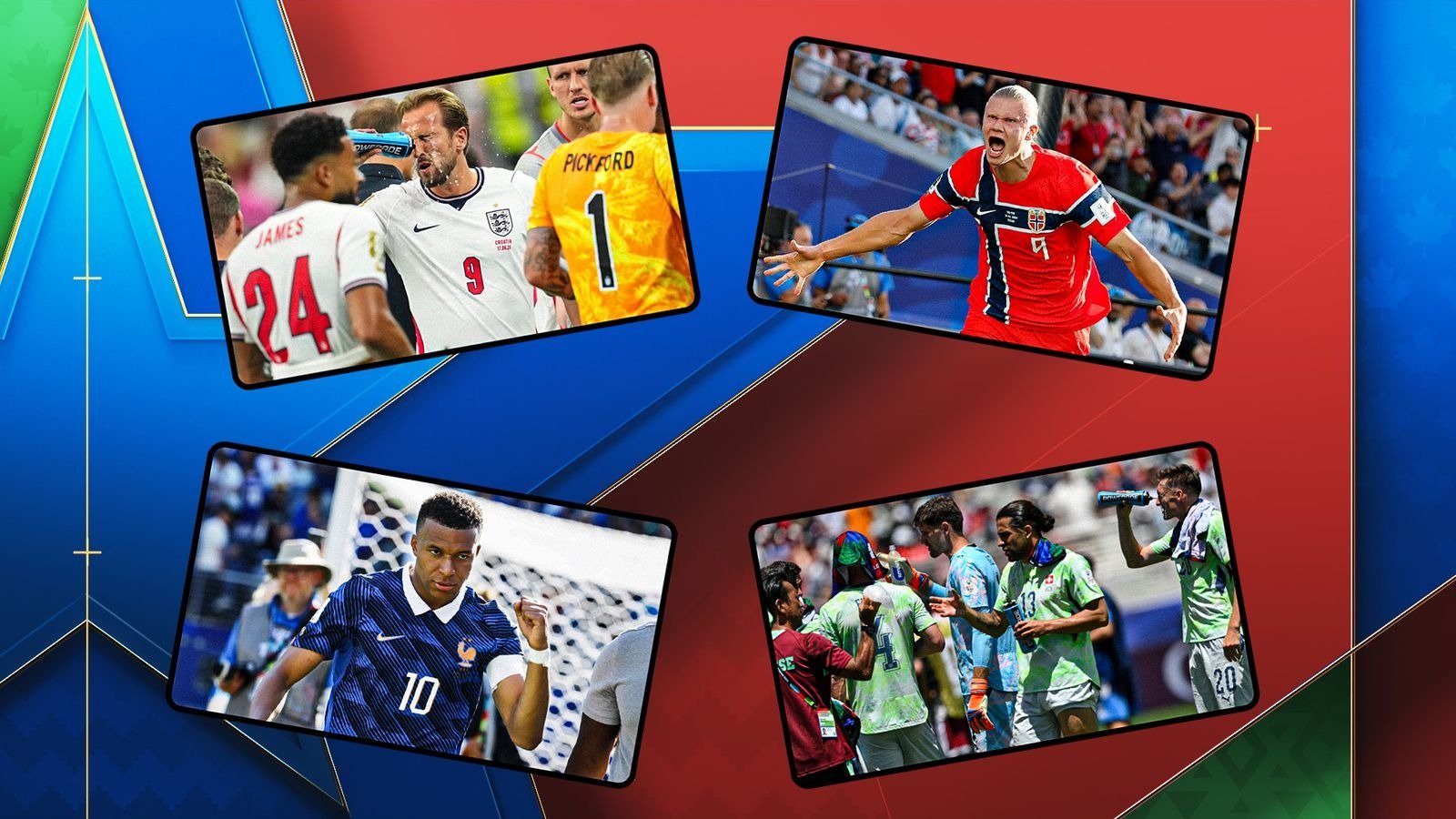
The heat and humidity have been a major factor in the tournament so far, with hydration breaks becoming a regular feature of the matchday experience. These breaks have been shown to shift momentum, with some teams using them to seize control and others losing their grip entirely. The pitch quality at MetLife Stadium has also been a concern, with players criticizing its hardness and dryness, which can affect ball speed, injury risk perception, and technical rhythm.

Harry Kane
playerThe use of connected-ball technology, also known as “Snicko,” has been instrumental in aiding VAR decisions, particularly in marginal touches. This technology has previously been used at major international tournaments, including the 2022 World Cup and Euro 2024, and has helped determine the accuracy of goals and disallowed goals.
Dynamic Impact: Kick-Off Delays and VAR Decisions
Kick-off delays have become a theme in the tournament, with games starting several minutes later than scheduled. This has been attributed to cultural differences and the time required to carry out pre-match pageantry. Additionally, VAR decisions have been influenced by the connected-ball technology, which has helped to tighten evidence thresholds on marginal touches.

Kylian Mbappe
playerThe tournament has also seen a high scoring rate, with an average of 3.12 goals per game, the highest of any World Cup to date. This has calmed fears of a lack of jeopardy owing to the easier means of knock-out qualification and searing heat in parts of the Americas.
- Key Takeaways: Superstar impact, heat and hydration breaks, and operational factors are shaping the tournament.
- Tactical Insights: Teams are using hydration breaks to seize control, while others are losing momentum.
- Dynamic Impact: Kick-off delays and VAR decisions are influenced by connected-ball technology and cultural differences.
The World Cup 2026 is shaping up to be a tournament of superstars, with players like Kylian Mbappe, Lionel Messi, and Harry Kane making their mark. However, operational factors such as heat, hydration breaks, and pitch concerns are also playing a significant role in shaping the outcome of matches. As the tournament progresses, it will be interesting to see how teams adapt to these factors and how they impact the final result.