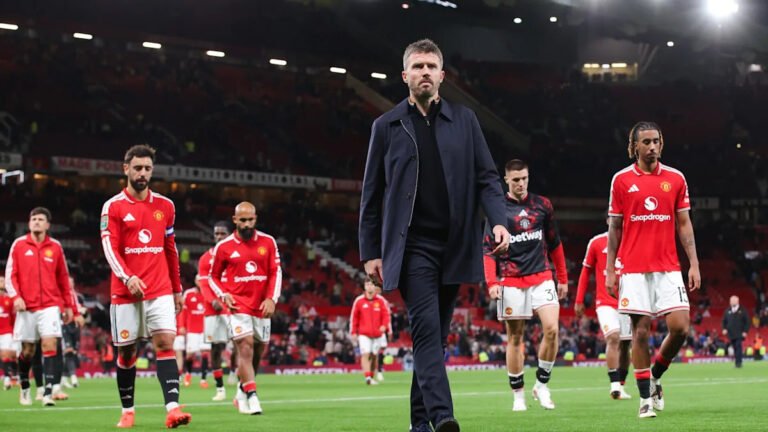

(Credit - Premier League)
The Premier League new season is arriving with a wave of managerial change that will directly alter where clubs finish, how squads are assembled, and which supporters spend August in cautious optimism or quiet dread. At the centre of the conversation today, June 7, 2026, sits the reported appointment of Xabi Alonso at Chelsea, a move that has not yet received a formal Chelsea FC official statement but is being positioned as one of the defining storylines of the entire pre-season period. When a head coach changes, the ripple effect is not abstract. It touches recruitment budgets, contract decisions, and the tactical identity a club will carry into the opening matchweeks of the 2026-27 campaign.
What You Need to Know
- Multiple Premier League clubs are entering the 2026-27 season under new management, with Xabi Alonso cited in connection with the Chelsea role as of June 7, 2026, though no official club confirmation has been issued.
- A managerial change typically reshapes a club’s entire football operation across four stages: coaching staff appointments, pre-season tactical install, recruitment aligned to the new system, and early-season selection stability.
- Supporters can expect the first visible evidence of any new manager’s approach within the opening five to eight Premier League fixtures, as squads adapt to new pressing triggers and build-up structures.
- Pre-season friendlies, captaincy decisions, and squad churn driven by a new coach’s preferences can affect away allocations and ticket demand before a single competitive ball is kicked.
Premier League Managerial Changes: The Tactical Mechanism
Every time a Premier League club installs a new head coach, the first thing that changes is not the squad, it is the information environment. Players who spent two years learning one pressing trigger now receive a new set of automatisms. A back four becomes a back three. A high defensive line drops ten yards. Set-piece routines built over an entire season are discarded in favour of a new analyst’s data. These shifts are not cosmetic. They are the reason why clubs with strong squads on paper can lose their first three fixtures under a new manager and why clubs with modest rosters can punch above their weight when a coach installs a system that suits the personnel already in the building.

Chelsea
clubThe practical timeline runs like this. Coaching staff arrive first, usually within days of the managerial appointment, and they immediately begin reviewing existing contracts, injury records, and the profiles of players who do not fit the incoming system. Pre-season conditioning then becomes a tactical install rather than a simple fitness block. By the time the first pre-season friendly kicks off, supporters watching from the stands or on a club’s streaming platform are already seeing the shape the manager intends to use in August. Captaincy changes follow, sometimes signalling which senior players have bought into the new regime and which are quietly being moved on.
For Chelsea specifically, the reported arrival of Xabi Alonso would represent a significant philosophical shift. Alonso built his managerial reputation at Bayer Leverkusen on a possession-dominant, high-press system that demanded technically capable full-backs and a ball-winning midfielder capable of operating in tight spaces. Replicating that at Stamford Bridge would require Chelsea’s recruitment team to identify transfer targets who fit those exact profiles rather than simply acquiring the highest-rated available players. That distinction changes how Chelsea spend, which agents they engage, and which positions they prioritise before the transfer window closes.

Xabi Alonso
coachPremier League 2026-27 Season Preview: Supporter Stakes and Squad Churn
The supporter experience of a managerial change is rarely discussed in tactical terms, but it carries real consequences. When optimism rises around a new appointment, away ticket demand increases. Clubs that were drawing modest away followings in the final months of a failed regime suddenly find their allocation oversubscribed. That is not sentiment, it is a logistical reality that supporter liaison officers and club operations teams have to manage before the first fixture list drops.
Squad churn is the other pressure point. A new manager who does not rate four or five existing squad members will push those players toward the exit in the same window he is trying to bring in his own targets. That creates a compressed timeline where a club is simultaneously selling, buying, and trying to run a coherent pre-season programme. The clubs that handle this transition cleanly tend to start the season with selection stability, a consistent eleven across the first six matches that allows new patterns to embed. The clubs that get it wrong are still rotating their back line in October.
Across the Premier League, the 2026-27 season is shaping up as one of the most tactically varied in recent memory precisely because of the volume of new appointments. Each new coach brings a different defensive block shape, a different approach to pressing triggers, and a different tolerance for risk in the final third. For neutral supporters, that variety is genuinely compelling. For clubs trying to qualify for European competition or avoid relegation, it means the early fixtures carry disproportionate weight as new systems either click or stall.
The clubs that move fastest through the four-stage transition, staff, conditioning, recruitment, and selection stability, will be the ones whose league positions in November reflect genuine progress rather than a pre-season honeymoon. The ones that rush the process, or appoint a manager whose preferred system does not match the existing squad’s strengths, will be the ones calling their boards for emergency funds in January. That is the structural reality of Premier League managerial change, and it is playing out across multiple clubs right now.
💡 Frequently Asked Questions
How quickly do new Premier League managers change tactics after appointment?
The tactical shift is typically visible within the first five to eight league matches. Coaching staff appointments happen within days of a managerial change, followed by a pre-season tactical install. By the opening Premier League fixtures, squads are already operating under new pressing structures and build-up patterns, though full automatism usually takes six to ten weeks to embed.
What does a new manager mean for Chelsea's transfer strategy in the 2026-27 season?
A new head coach directly shapes the recruitment profile Chelsea pursue. If Xabi Alonso's reported appointment is confirmed, the club's scouting operation would pivot toward players who fit a possession-based, high-press system, specifically technical full-backs and a ball-winning central midfielder. That changes which targets are prioritised and how quickly deals need to close before the window shuts.
How do Premier League managerial changes affect supporters and match-day operations?
New appointments typically drive a spike in supporter optimism that increases away ticket demand and can affect allocation logistics before the season begins. Squad churn driven by a new manager's preferences also reshapes the squad's identity, which can influence season ticket renewals, merchandise demand, and the overall atmosphere at home fixtures during the early weeks of the campaign.
About the Author